

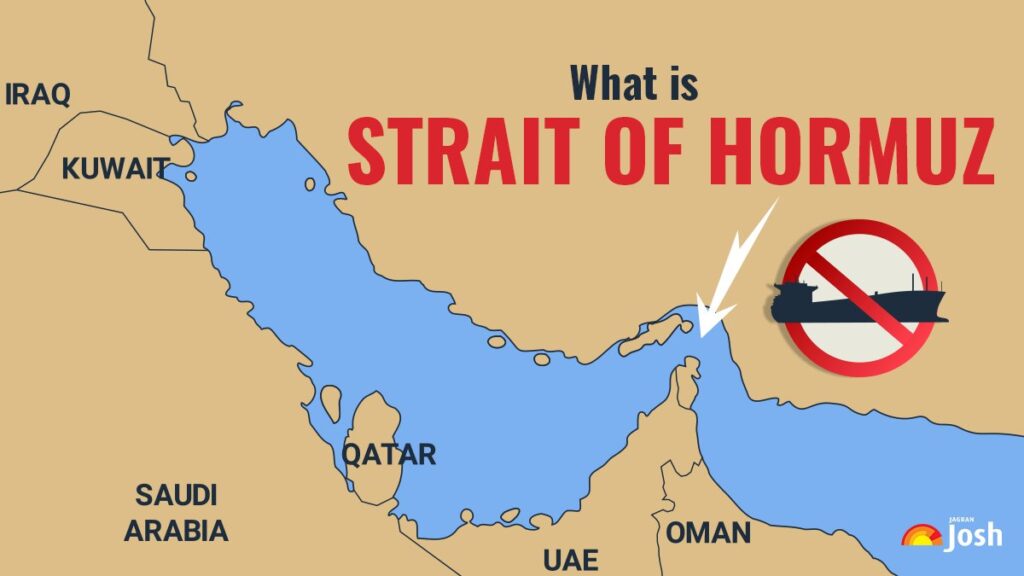
The Strait of Hormuz and the Significance of Maritime Routes
Recent conflict in the Strait of Hormuz underscores the vulnerability of critical maritime chokepoints that carry much of the world’s trade and energy supplies. Alongside the Strait of Malacca and the Suez and Panama canals, these strategic routes face ongoing geopolitical tensions that threaten global supply chains. Meanwhile, emerging Arctic shipping routes could reshape maritime dynamics, potentially challenging the dominance of traditional power centers (Alfredo, 2026).
Current events in the Strait of Hormuz have highlighted the huge importance of maritime routes. These are shaped by compulsory points of naval passage, located in strategic locations that act as chokepoints. They represent the compulsory crossing of waterways between oceans, between oceans and seas, and between seas.
Their significance is linked to that of maritime transport itself, which represents the fundamental bloodstream of global trade. This transport carries 80% of the world’s trade by volume, carrying vital crude oil and other raw materials, semi-processed goods or finished products. As such, it plays a fundamental role within international supply chains.
Different kinds of maritime routes
The top four
Strait of Malacca
The Strait of Malacca connects the Indian Ocean to the South China Sea (in the Pacific Ocean). It is the route through which 30% of global trade and 23.7 million barrels of oil pass daily. This includes two-thirds of China’s trade volume and around 80% of its energy imports. It is located between the island of Sumatra (Indonesia) and the Malay Peninsula (Malaysia and Singapore). Around 29% of the global seaborne oil trade passes through the Strait of Malacca. In fact, to reduce its critical reliance on the Strait of Malacca, China has developed a major energy corridor through Myanmar. A corridor consisting of two parallel pipelines transporting crude oil and natural gas from the Indian Ocean coast of Myanmar to Southwestern China.
Suez Canal
The Suez Canal, on its part, connects the Mediterranean Sea with the Red Sea, which leads to the Indian Ocean. Between 12% and 15% of worldwide trade and about 30% of global container traffic transits this route. Roughly 9% of the global seaborne oil flows (about 9.2 million oil barrels a day) and 8% of liquified natural gas (LNG) volumes use this route. Any disruption along the canal can significantly affect global supply chains, increase transportation costs, delay deliveries, and contribute to rising fuel and commodity prices across international markets, making the canal one of the world’s most strategically important maritime trade passages today, especially during periods of geopolitical conflict or economic instability.
Panama Canal
The Panama Canal connects the Pacific and the Atlantic oceans. About 5% of global marine trade passes through it. Meanwhile, 2.3 million barrels of oil per day pass through this waterway. However, while the Suez Canal allowed for the transit of supertankers of up to 200 thousand tons, the Panama Canal was limited to 65 thousand tons and to a configuration adapted to its particular standards. The so-called Panamax standards. Since 2014, as a result of the expansion of the canal, the New-Panamax standard has applied, substantially increasing both capacity and tonnage — now reaching 120,000 tons, enabling larger vessels to transport goods more efficiently and reducing international shipping congestion worldwide.
Highly sensitive geopolitical spots
Needless to say, in addition to their economic relevance, or precisely because of it, maritime routes are highly sensitive geopolitical spots. The Suez Canal has a longstanding history in this regard. In 1956, after Egypt’s President Gamal Abdel Nasser nationalized the canal, an invasion by Britain, France and Israel took place. For several months, the canal remained closed, significantly disrupting global shipping and trade. Ten years later, in 1967, the Suez Canal was again closed, as it became the frontline between the combatant forces of Israel and Egypt during the Six-Day War. Following the conflict, this waterway remained shut for eight years, adding around 8,000 to 10,000 kilometers to trade shipping routes that depended on the canal. At the opposite end of the waterway that connects with the Suez Canal — in the southern tip of the Red Sea that joins the Indian Ocean — there have also been recent problems. In the Bab el-Mandeb Strait and the Gulf of Aden, the Iranian-backed Houthis of Yemen have been attacking commercial shipping since the end of 2023 in retaliation for Israel’s war in Gaza.
Although the Strait of Malacca is not a contentious international spot, its adjacent South China Sea remains one of the world’s most disputed maritime areas. Stepping over the claims of several Southeast Asian countries, as well as over the normative of the UN Convention on the Law of the Sea and the jurisprudence of the International Court of Justice, China asserts its rights over 90% of the South China Sea. Moreover, in 2010, Chinese Foreign Minister Yang Jiechi declared that the sea represented a “core national interest” for his country, while telling his Southeast Asian counterparts at an ASEAN meeting that “China is a big country and other countries are small countries, and that’s just a fact.” Additionally, in order to assert control over this waterway, China has built and heavily militarized 27 artificial islands within it. China’s claims are not only rejected by its South China Sea neighbors but also by the US and a significant part of the international community. The US and many Western nations assert a right of free passage through this sea, challenging China’s claim by periodically sailing warships through it.
The geopolitical and economic significance of the Arctic routes may be enormous, as they could represent new active passages between the Atlantic and the Pacific oceans. . Although 80% of China’s crude oil imports and the bulk of its exports sail through this waterway, the same happens to Japan, South Korea and Taiwan. Moreover, it is a vital trade route for the 620 million people who inhabit Southeast Asian countries. Trade worth more than $5.3 trillion takes place annually in those waters, representing more than one-third of the world’s maritime traffic. The Panama Canal has also become a sensitive geopolitical spot in recent times. By asserting American rights under the Monroe Doctrine, US President Donald Trump has threatened to take it while forcing Chinese interests out of the canal. Indeed, Hong Kong company CK Hutchison, which controlled two ports within it, was pressured into selling such assets to the American investment firm BlackRock. However, the Sword of Damocles represented by Trump’s threat of taking possession of the Panama Canal has not disappeared.